
Why DJ Pilate is the pulse of Spokane’s nightlife

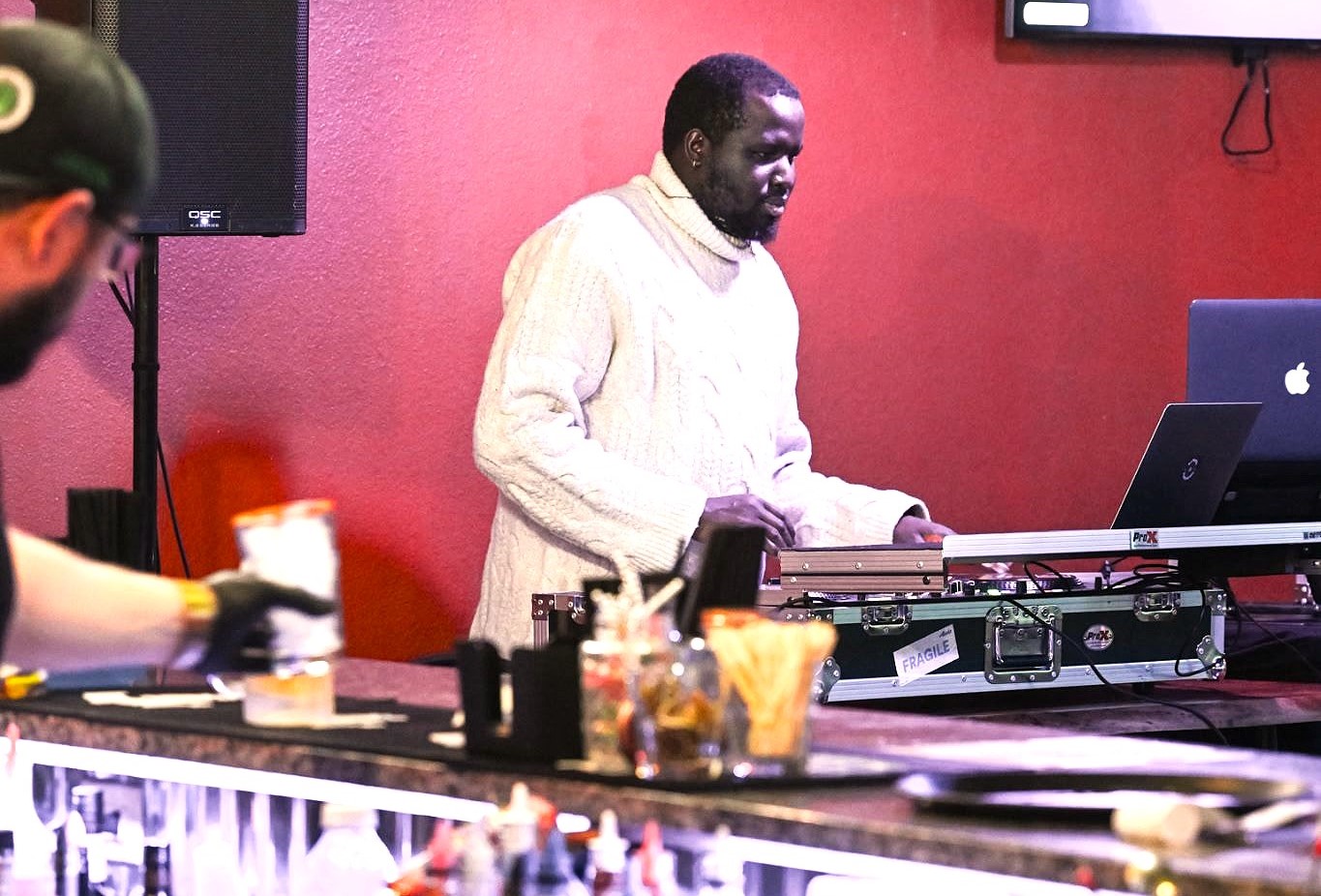
The story of how one man turned Spokane’s weekends into a movement
SPOKANE
Long before he became the man turning Spokane’s cold nights into sweat‑slicked, shoulder‑rolling celebrations, DJ Pilate was a boy in Uganda dancing under open skies to Jose Chameleone, a rhythm that stitched itself into his body long before he knew where it would take him. That beat followed him across oceans, tucked between memory and muscle, until it landed in a city that had no idea it was about to be rewired.
Spokane was not ready for the Kampala‑born voltage he carries into every room, not for the instinct that can read a crowd faster than a strobe light flickers, not for the confidence of a man who did not wait for permission to build a scene from scratch. One minute he was an immigrant kid learning English. The next, he was the architect of a cultural shift, pulling Afrobeats, dancehall and East African joy into a city that did not yet know it needed any of it. And now, when he steps behind the decks, something changes. The room warms. The diaspora exhales. Spokane begins to move the way Kampala taught him.
His story begins with a soundtrack that is practically a national archive. “Mama Mia started everything,” he says of Jose Chameleone’s early‑2000s classic, but it was Kuuma Obwesigwa that carved itself into his memory, the last song he heard at a Refugee Day celebration before leaving Uganda.
A schoolyard full of joy, a community dancing as if to hold time still, a young boy imprinting the moment like a heartbeat. That energy, he says, is what he tries to give people now, which is why his sets feel less like playlists and more like portals, a way of transporting a room full of strangers into a shared memory they did not know they had.
His first week in America was a collision of awe and disorientation. He arrived without English, without a roadmap and without any idea that music, not medicine or engineering, would be his calling. The kindness was overwhelming, he says, but the culture shock was real. Racism was new to him. Everything was different. At Eastern Washington University, he noticed African students drifting through campus without a cultural anchor, so he built one.
The Afro Caribbean Association became a space for identity, rhythm and belonging. After college, he watched Spokane’s nightlife and saw a gap, a city dancing to hip‑hop and pop but rarely to the sounds that shaped him. He was already DJing house parties, already known in the community, already carrying Kampala’s pulse in his chest. The question was not if he would step in. It was when.
The breakthrough came in 2023, when he was booked for an Afrobeats and Dancehall night at Jokers in Tri‑Cities. It sold out. The next one sold out too. Spokane friends drove down, saw the crowd, felt the energy and realized something was missing back home. Then came the idea: what if they brought an African artist to Spokane? The plan was ambitious, the group was large, the disagreements were immediate, but four remained and found a home at Lord Stanley’s Bar. That was the beginning, he says, and it was. The nights grew. The crowds grew. The city began to hum with a new sound.
Ask Pilate about playlists and he laughs. “I do not make them,” he says. “I read the room.” He watches faces, bodies, moods. He shifts genres like a storyteller turning pages. West Africans light up at Afrobeats. East Africans lean into Swahili melodies. Central Africans wait for the seventh‑guitar shimmer of amapiano. Americans are down for anything with a pulse. And when he wants to bring the whole room into one breath, he knows exactly what to play. Magic System’s 1er Gaou.
That song unites everyone. Africans, non‑Africans. It does not matter. When it plays, the whole room sings. But beneath the global hits, he carries something quieter and sacred. After the hype, he goes back to traditional Ugandan sounds. They calm him. They remind him who he is. He brings that identity into every set, in the way he dances, in the Ugandan tracks he always slips in, in the joy he refuses to dilute.
His biggest heartbreak is not the American audience. They have embraced him. It is the Africans who have not. “My biggest loss is the lack of support from some Africans here,” he says. “We need each other. We need to build something permanent.” But he refuses bitterness. The American audience is open, curious, welcoming. They inspire him.
Pilate is not chasing fame. He is building a home. He imagines a Spokane where African artists do not skip the city for Seattle or Portland, a downtown festival with drums echoing off brick buildings, a venue where African immigrants can walk in and feel their shoulders drop, a place that feels like theirs.
He insists he is not trying to build something huge, that he simply wants a place where people can feel at home, yet the truth is undeniable. He is building something huge. A new party culture. A new community. A new rhythm in a city that did not know it needed one.
When he thinks of his younger self, the boy dancing to Chameleone in a schoolyard, Pilate smiles. He never imagined this. His parents wanted engineering or medicine. DJing was not even a thought. But he found something he loves, and he is grateful. Grateful for Spokane. Grateful for the crowds.
Grateful for the chance to turn nostalgia into celebration, displacement into belonging, memory into music. In 10 years, he hopes Spokane will say one simple thing about him: he made us feel alive. And the truth is, on most nights, as the lights dim and the first beat drops, he already does.
Copyright © 2026 All rights reserved
