
Familiar accent? Kenya’s own Minnesota type scandal breaks open in gravy ‘Mafia House’

SHA fraud trail uncovers ghost patients, impossible births and a billion‑shilling appetite for public money
NAIROBI
Kenya appears to be rehearsing its own version of the Minnesota health‑care scandal, only with more audacity, more imagination, and far more zeros. Barely weeks after the national government announced that Sh11 billion in suspicious claims had been flagged within the Social Health Authority (SHA), prosecutors are now preparing to march a parade of hospital owners, directors, and even a regulator into court.
The Office of the Director of Public Prosecutions (ODPP) confirmed on Wednesday that it has approved charges against several individuals and facilities following a month‑long review of investigation files submitted by the Directorate of Criminal Investigations. The allegations read like a syllabus in white‑collar crime: fraudulent registration, unlicensed operations, false claims, and the small matter of siphoning public money through creative paperwork.
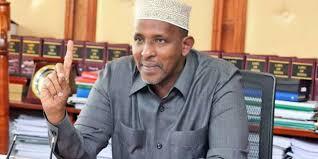
This prosecutorial green light comes hot on the heels of Health Cabinet Secretary Aden Duale’s promise to publicly name every institution entangled in the multibillion‑shilling racket exposed by SHA’s fraud‑detection system. True to his word, the list is long, colourful, and depressingly familiar.
Among the facilities flagged is Danaba Care Hospital, whose directors, Mohammed Kulow Ali and Hassan Adan Ibrahim, will be charged with conspiracy to defraud and operating an unlicensed health facility. Their other venture, Adfaal Kids Care Medical Centre, has also been swept into the dragnet, with two additional directors facing charges under the Proceeds of Crime and Anti‑Money Laundering Act.
The pattern repeats with wearying consistency. Former directors of Kamishawa Medical Centre, proprietors of Kaafi Nursing Home, owners of Mama Nerbeel Nursing Home, and several others will all face variations of the same accusations: obtaining money by false pretences and running facilities that, legally speaking, should not have been treating even a houseplant.
Even the regulators are not spared. Harun Liluma, an employee of the Kenya Medical Practitioners and Dentists Council, is accused of abusing his access to computer systems to facilitate the scheme.
The scale of the alleged fraud would be comical if it were not so tragic. Appearing before Parliament in January, CS Duale revealed that some hospitals claimed 100 per cent caesarean‑section deliveries, an anatomical impossibility that even the World Health Organisation’s recommended 10–15 per cent rate could not politely explain away. One facility in Tharaka Nithi reportedly claimed that all 500 mothers who delivered there underwent C‑sections. The SHA system promptly rejected the claims, perhaps out of sheer disbelief.
Other cases bordered on the surreal. Some health workers allegedly registered themselves as patients to generate fake claims. In one county, the AI system detected “ghost patients” visiting primary care facilities ten times a day. And in Kwale, a single patient reportedly registered 381 dependent children—an achievement that would make even the most prolific biblical patriarch blush.
The Auditor‑General has raised further concerns about the ownership of the SHA system itself, noting that a private consortium, reportedly linked to an Indian firm, controls a platform expected to process Sh11 billion annually, despite the government not fully owning the Sh104 billion infrastructure.
SHA has now given hospitals 15 days to account for Sh3 billion in claims flagged for missing documentation or suspected fraud. Meanwhile, private hospitals under RUPHA insist they are owed Sh76 billion by SHA, setting the stage for a financial standoff that could reshape the health‑care landscape.
Through it all, CS Duale has maintained a stern refrain: public resources must be protected, and the integrity of Kenya’s health‑financing system will not be sacrificed at the altar of opportunism. Whether the prosecutions deliver justice, or merely scratch the surface of a deeper malaise, remains to be seen. But one thing is clear: Kenya’s health‑care sector is undergoing a reckoning, and this time, the numbers refuse to be ignored.
The Auditor‑General has raised further concerns about the ownership of the SHA system itself, noting that a private consortium, reportedly linked to an Indian firm, controls a platform expected to process Sh11 billion annually, despite the government not fully owning the Sh104 billion infrastructure.
SHA has now given hospitals 15 days to account for Sh3 billion in claims flagged for missing documentation or suspected fraud. Meanwhile, private hospitals under RUPHA insist they are owed Sh76 billion by SHA, setting the stage for a financial standoff that could reshape the health‑care landscape.
Through it all, CS Duale has maintained a stern refrain: public resources must be protected, and the integrity of Kenya’s health‑financing system will not be sacrificed at the altar of opportunism. Whether the prosecutions deliver justice, or merely scratch the surface of a deeper malaise, remains to be seen. But one thing is clear: Kenya’s health‑care sector is undergoing a reckoning, and this time, the numbers refuse to be ignored.
Copyright © 2026 All rights reserved